
I have completed my Part 66 licence (and/or exams) under a foreign regulator (e.g., EASA). Why do I still have gaps for the equivalent CASA modules?
It is common when applying credit from an overseas regulators that knowledge gaps will exist for certain modules. The most obvious of these is Module 10 (Aviation Legislation) which clearly needs to be assessed to take into account Australia rules and regulations. However, there are also other reasons why gaps may be present in other modules, despite the same content being covered. These reasons may include:
- Different knowledge assessment level requirements
- Missing (or removed) content
- Pre-Part 66 licencing systems
- Credit through alternative study
Some examples of each of the above will be provided, although these are by no means exhaustive.
Different Knowledge Assessment Level Requirements
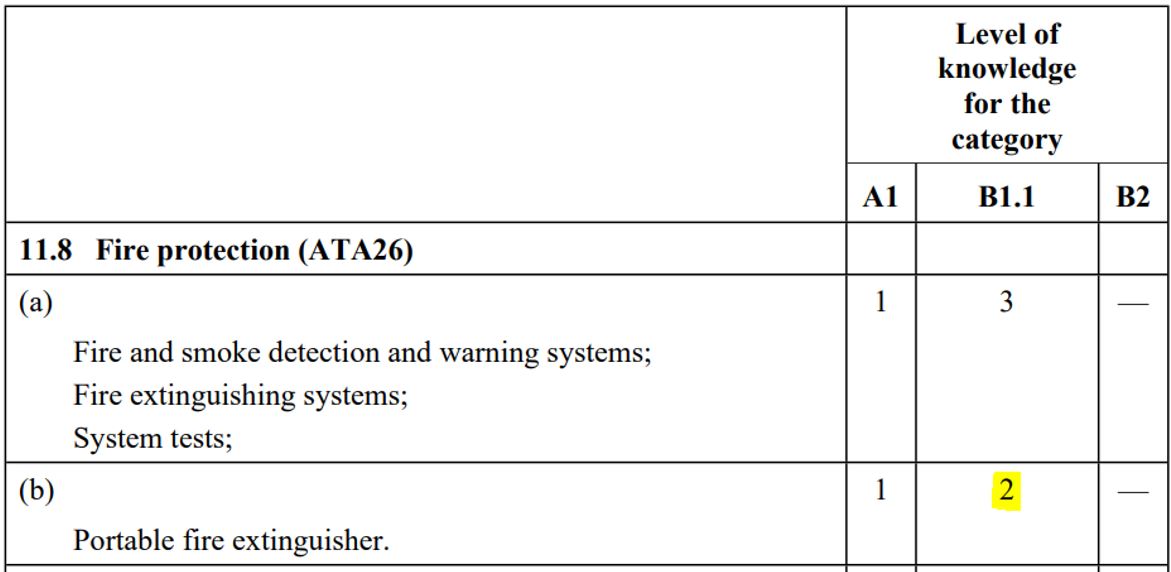
Different regulators may require assessment of equivalent topics, but at different levels. A common example of this for a B1.1 licence is topic 11.8(b) – Portable fire extinguishers. Under CASA, this is required to be assessed at knowledge level 2 (see below).
By contrast, the EASA requirement for the equivalent topic only requires knowledge level 1 (see below).
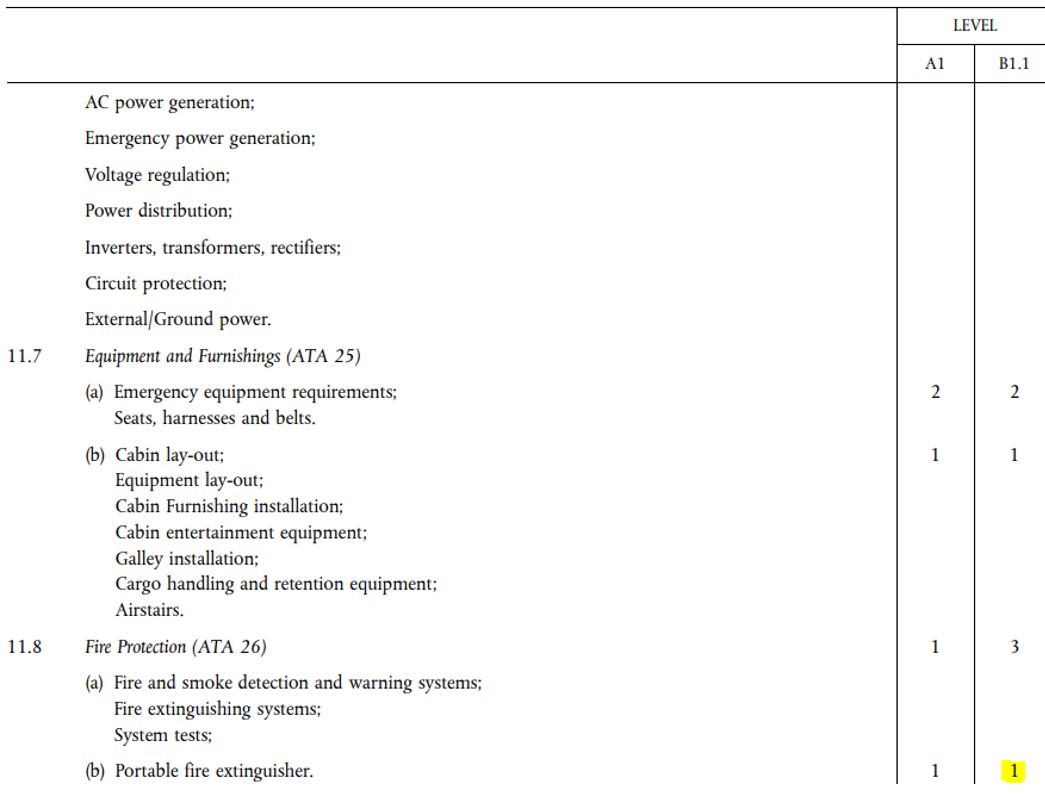
To comply with the part 66 requirements, a gap exam covering this topic to level 2 would be required.
In some cases, the level requirements have changed, for example when EASA has released a new version of the EU commission regulation. This may result in changes to the knowledge level required. Compare the following two versions to the EU commission regulation 1321/2014. Below is the original version (published 17/12/2014) which requires Topic 5.1 (Electronic Instrument Systems) to be assessed at knowledge level 3 for a B2 licence outcome.

Compare that the most recent version of the updated commission regulation (version 2023/989 published 23/05/2023) which requires only a knowledge level 1 for the equivalent topic (see below).

CASA requires knowledge level 3 for this topic where a B2 licence outcome is sought (see below).
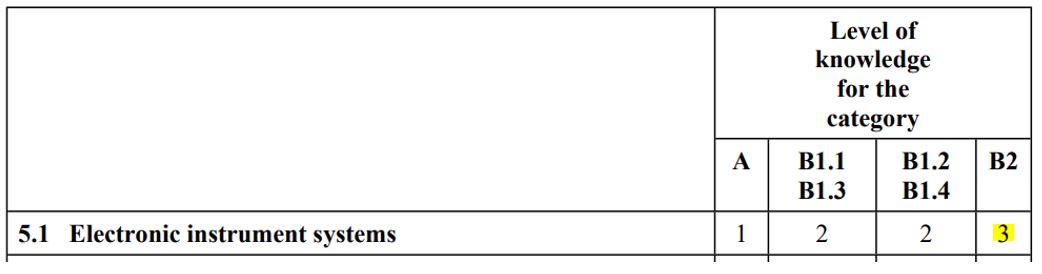
Again, to comply with the part 66 requirements, a gap exam covering this topic to level 3 would be required. Note that the date of the EASA examination would be taken into account, and credit applied based on the commission regulation in force at the time.
Missing (or Removed) Content
Content is often missing in older versions of regulations, as topics have been later added. Two common examples from EASA commission regulation 2042/2003 include:
- Module 11 (which ends at topic 11.18 – see below), providing no coverage of topics 11.19 through 11.21
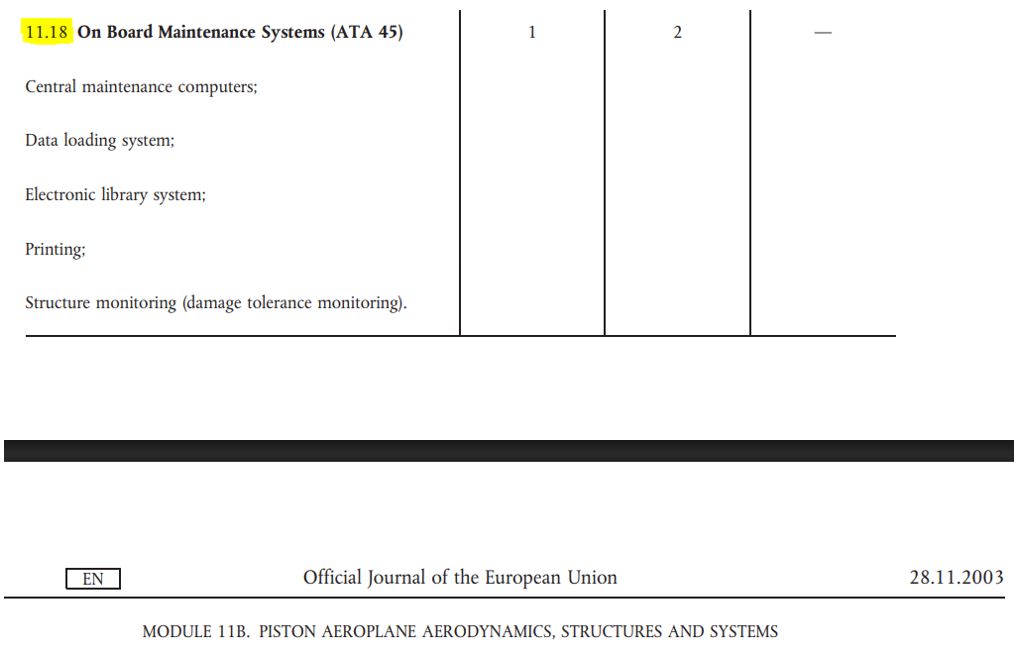
- Module 13 (which ends at topic 13.10), providing no coverage of topics 13.11 through 13.22
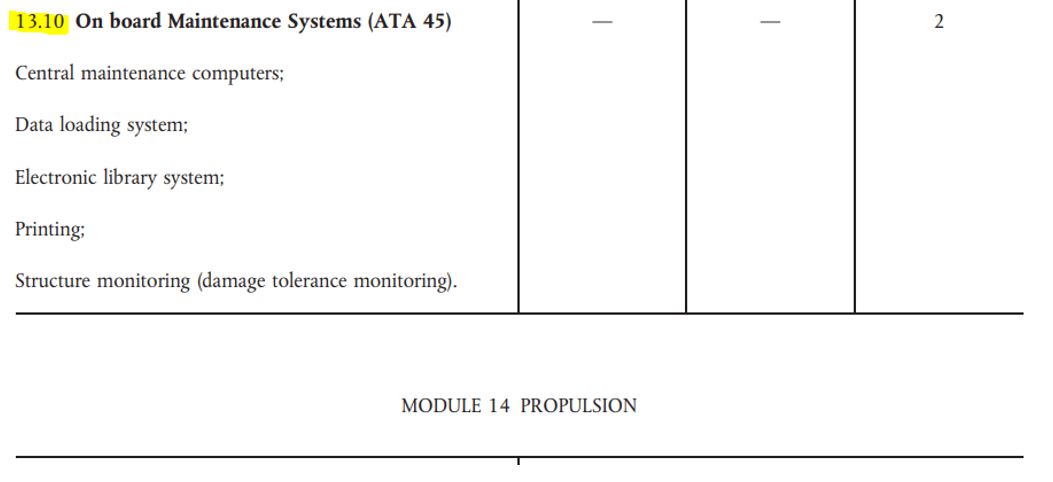
Depending on the date of examination, credit will be applied based on the commission regulation in force. Where gaps exist, these will need to be bridged with examinations.
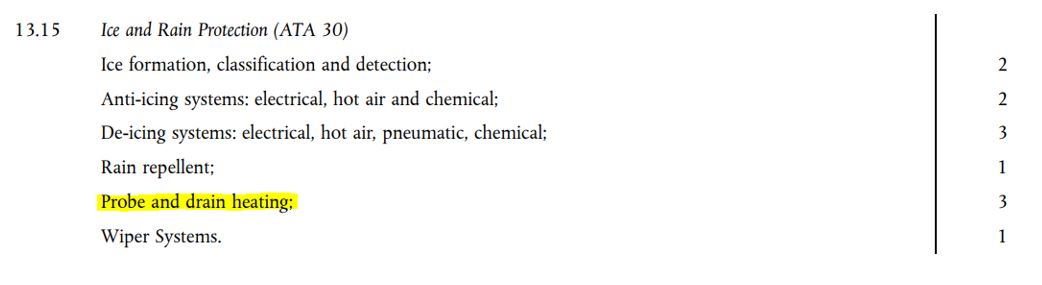
In some cases, entire topics have been removed from the part 66 syllabus. Shown below is the original version of commission regulation 1321/2014 (published 17/12/2014) showing the requirement of Topic 13.15.5 (Probe and drain heating).
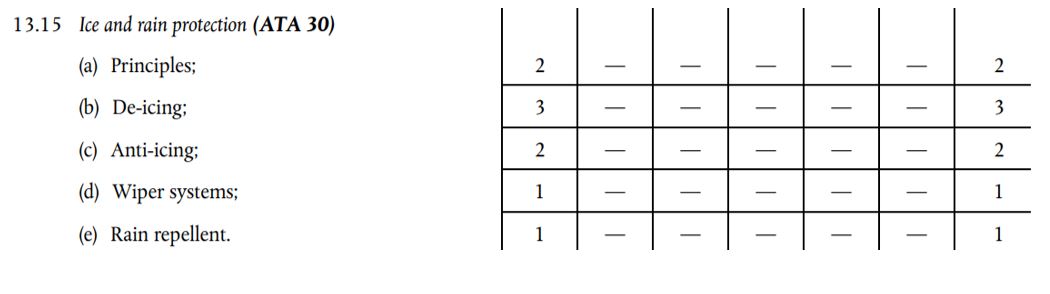
Note that this topic has been completed removed from the most recent version of the updated commission regulation (version 2023/989 published 23/05/2023) (below).
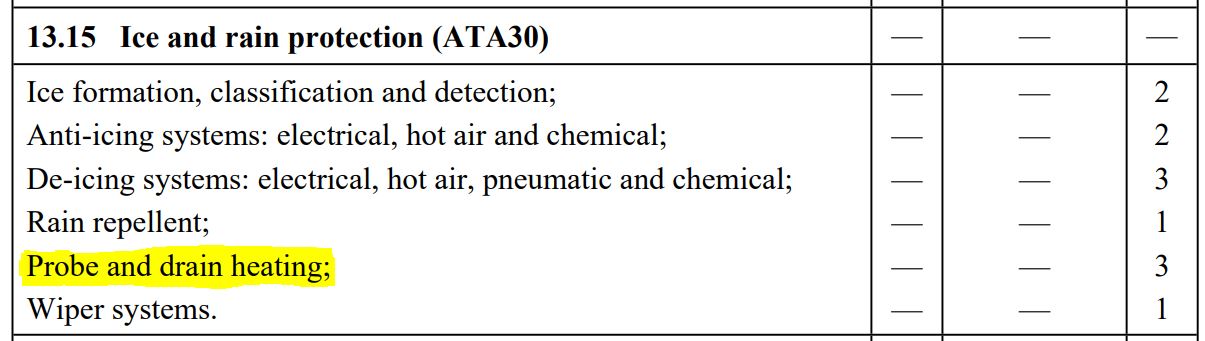
As this is still a requirement under CASA (see below), a gap exam will be required if the content was not assessed under EASA.
Pre-Part 66 Licencing Systems
Some EASA Part 66 licence holders who achieved their licence before the introduction of the Part 66 system would have completed examinations which were not regulated under Part 66. While these licences may have been transitioned to the equivalent EASA Part 66 licence categories, if the examinations were not completed under EASA Part 66, credit cannot be applied directly for any completed examinations. The only exception would be where the training organisation has been approved (by CASA) to map the syllabus of the foreign NAA in force at the time the examinations were completed, to the equivalent CASA Part 66 content.
Credit Through Alternative Study
Under some regulators, credit against Part 66 requirements may be satisfied through other forms of completed education. This tends to be country specific where the national aviation authority (NAA) may approve licence applications with this credit. A common example is the waiving of the requirements for Module 1 (Mathematics) and Module 2 (Physics) if evidence of previous study (e.g. high school certificate) is provided. There are other cases too, where tertiary education (e.g. Science or Engineering degrees) provide credit under some NAAs.
As the licence may be issued under a European NAA, which falls under the EASA umbrella, the result is an EASA licence with partial credit applied in lieu of Part 66 examination requirements.
Under CASA, there is no provision to accept alternative study as credit towards Part 66 examinations. All part 66 requirements under CASA must have been completed in accordance with the standards laid out in the Part 66 Manual of Standards Appendices I and II. Where gaps exist within a part 66 module, gap examinations will need to be completed to address these gaps. Likewise, where entire modules have been credited, these will need to be completed in full to satisfy the CASA requirements.
The only exception to the above is where CASA Basics (under CAR31) have been completed. These have been specifically approved by CASA to provide credit against equivalent Part 66 topics in accordance with Annex A to the AMC/GM for Part 147.
Useful links
College course information and current CASA guidance related to this article.
0 readers found this helpful